I pay close attention when a traditional manufacturer builds a digital business from inside its own operations. The story is usually more instructive than a software company selling a generic transformation framework. Formary is one of those cases.
The founders, Lisa-Marie and Moritz Bittner, came from a family business with deep knowledge of plastic thermoforming. They saw how much time was lost in manual enquiries, incomplete specifications, repeated clarification and supplier selection. Their response was not simply to put a catalogue online. They turned the hidden logic of the process into a guided digital workflow.
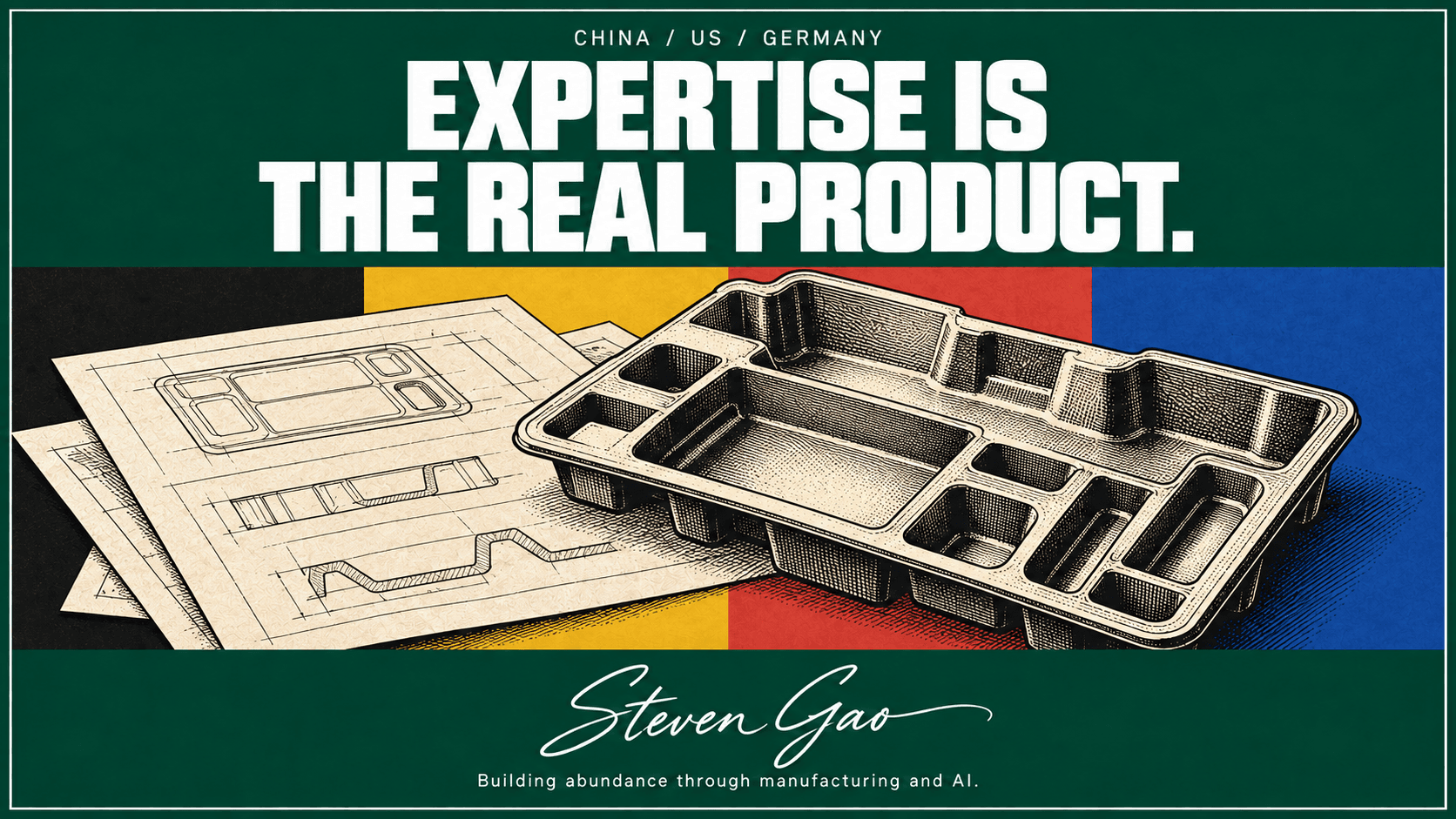
The real product is encoded expertise
A customer can configure a custom deep-drawn part, provide the necessary technical information and receive a structured quotation. Behind that apparently simple experience sits years of manufacturing knowledge: which questions matter, what makes a design manufacturable, how cost drivers interact and which producer is suited to the job.
This is the part many digital-transformation projects miss. The competitive advantage is not the form on the website. It is the decision logic that the form captures.
The strongest industrial software often begins as expertise that a company can finally explain, structure and repeat.
From manufacturer to network orchestrator
Formary also changes the boundary of the original business. Instead of serving every order only through one factory, the company can match work with a specialised manufacturing network while remaining the customer’s contractual counterpart. That creates more capacity and product breadth without pretending that every supplier is interchangeable.
The important word is specialised. Industrial marketplaces fail when they reduce suppliers to price and availability. A useful network must understand capability, material, tooling, quality and the accumulated experience behind a process.
Three lessons I take from the case
- Start with a process you know in uncomfortable detail. Digital reinvention is easier when the problem is already yours.
- Productise the questions, not only the transaction. A guided specification can be more valuable than a large supplier directory.
- Let software expand the operating model. The biggest value may come from coordinating a network, not automating one internal step.
Why this matters beyond one niche
Germany has thousands of specialised manufacturers with knowledge that lives in experienced people, spreadsheets and informal routines. Their digital opportunity is not to imitate Silicon Valley. It is to make that knowledge usable at a new scale.
Formary shows a path I find credible: begin with the family company’s hard-earned expertise, redesign the customer journey around it and build a platform only after the workflow creates real value.
References