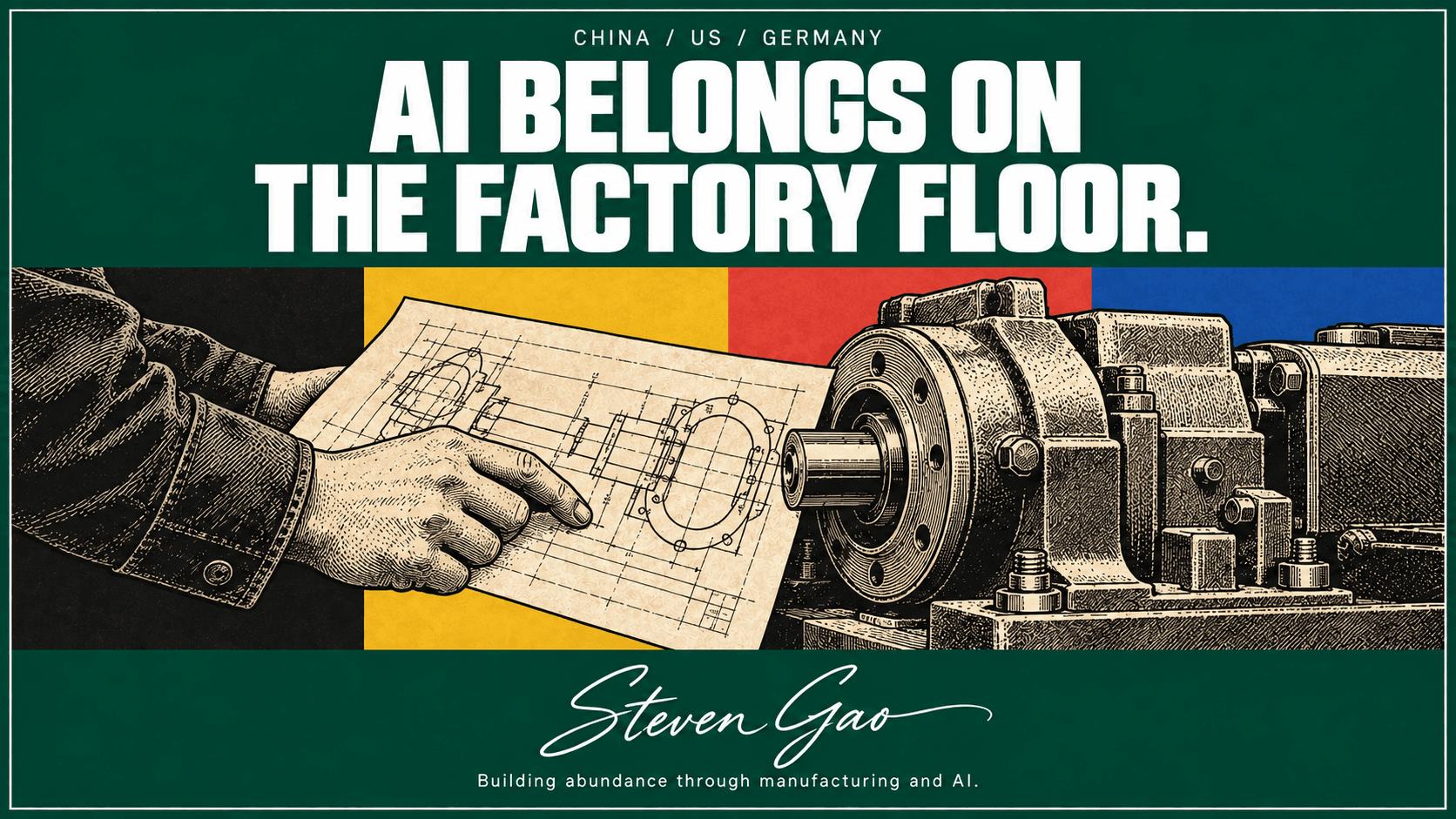
I decided to build IndustrialMind.ai around a simple conviction: general AI becomes valuable in manufacturing only when it understands the work. A fluent answer is not enough. The system must understand the machine, the process, the product, the operating condition and the cost of being wrong.
I came to this conclusion through experience, not through a market map. I studied mechanical engineering in Germany, worked across industrial cultures and helped build digital transformation capability inside high-volume manufacturing. Again and again, I saw the same pattern: the software was rarely the hardest part. The hard part was translating between how a system represents the factory and how the factory actually runs.
A factory is not a chat window
Consumer AI can be useful even when it is occasionally vague. Industrial AI operates under a different contract. A recommendation may affect quality, safety, throughput or capital equipment. It must know when it lacks context. It must preserve traceability. It must respect approvals and operating limits.
That means industrial intelligence is not one model. It is a system that brings together plant context, engineering knowledge, live and historical data, deterministic tools, human responsibility and a clear path from observation to action.
The goal is not to put AI beside the engineer. The goal is to make engineering work more understandable, repeatable and effective.
What it means to understand industry
- Understand context: which line, product, revision, shift and operating state does the question belong to?
- Understand constraints: which limits are physical, which are contractual and which are temporary operating choices?
- Understand evidence: which conclusion comes from a sensor, a document, an engineer or an inferred relationship?
- Understand action: who is allowed to change what, and how will we know whether the change worked?
Why I believe now is different
Factories have accumulated years of data, documents and disconnected applications. Until recently, extracting meaning from that material required too much manual integration. Foundation models change the interface to industrial knowledge. They make it possible to search across formats, explain technical context and coordinate specialised tools through natural language.
But the last mile remains industrial. A model still needs grounding, permissions, validation and an operating workflow. The winners will not be the teams with the most impressive generic demo. They will be the teams that turn intelligence into a dependable part of the production system.
The company I want to build
I want IndustrialMind.ai to build AI manufacturing engineers: systems that help factories diagnose problems, preserve expert knowledge and move from insight to controlled action. I also want us to stay close enough to production that we never confuse a persuasive presentation with a working product.
This is difficult work. It requires software, manufacturing knowledge and the humility to let operators challenge the model. That combination is exactly why it is worth doing.
References